



Couples
At 50, pursuing IVF proves that sometimes choosing wisely is more effective than simply trying hard.
“At the age of 50, being able to become a mother makes me feel incredibly fortunate. High age, multiple failed IVF attempts, and the surgical removal of my uterus and ovaries due to illness — I once thought the word ‘mother’ would never belong to me. Yet, seeing the heartbeat on the ultrasound filled me with indescribable joy. This symbol of hope and happiness finally arrived after so many years of struggle and anticipation.”
In this era of late marriage and late parenthood, I can say I am an extreme example. For the sake of my so-called career, freedom, and independence, I only entered marriage at 45 and began considering becoming a parent. I knew that wanting a child at my age was already very late; declining ovarian function, low egg quality, and physical limitations all stood in the way of becoming a mother. Still, I clung to a glimmer of hope and decided to give it a try.
From 45 to 50, I experienced so much: at 46, egg retrieval and embryo freezing, three failed IVF attempts, and at 48, illness forced me to undergo a hysterectomy and oophorectomy. Though there were one or two fleeting chances, none succeeded. Each setback made me feel as if motherhood was truly beyond my reach. Thankfully, my husband constantly comforted me, saying, “Life without children can still be very fulfilling.”
At 49, a new ray of hope appeared in my life. With my last frozen embryo, I turned to Uterus International Medical, planning to use a gestational surrogate to realize my dream of becoming a mother. Fortunately, they were very responsible and thoughtful. I still remember the doctor at Uterus International Medical telling me:
“Given your situation, your frozen embryo was created when you were 46, and its quality is average. Considering the ages of both parents and the embryo grade, the live birth rate for patients over 43 is generally below 10%. We do not recommend using this frozen embryo. If you want a child, you could consider donor embryo transfer with a gestational surrogate.”
After careful consideration, I decided to follow the doctor’s advice. I am very glad I did; otherwise, I might never have received the good news that followed. In the second half of 2023, my husband and I selected the donor and gestational surrogate together. The medical team at Uterus International Medical was very professional and thorough — we went through two rounds of selection, and I was provided with many options until I was completely satisfied.

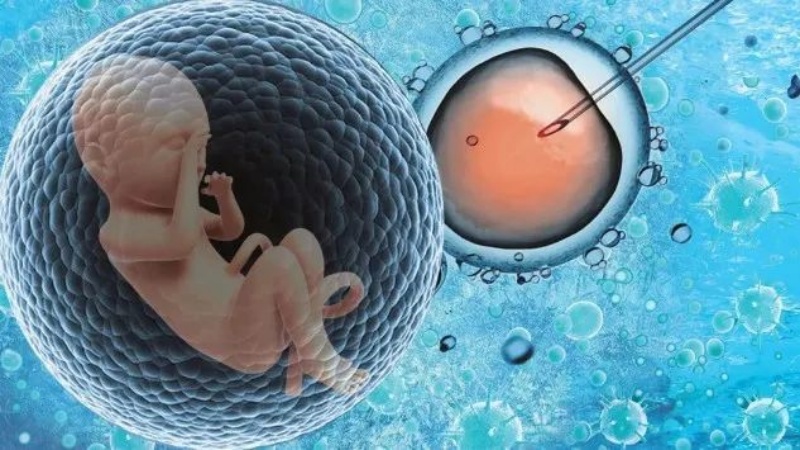
As a result, at the beginning of 2024, I received my first piece of good news: 30 eggs were retrieved, 15 were successfully fertilized, and after genetic screening, 7 embryos were selected — 2 boys and 5 girls, all with good embryo quality. I then chose one male embryo for transfer. In July, I received the second piece of good news: the fresh ultrasound report confirmed a fetal heartbeat, with a crown-rump length of 0.54 cm and a heart rate of 124 bpm.

Next comes the anticipation of a safe and healthy birth for the baby. I also wish everyone to be as fortunate as I am and have their own little one! I still remember the day we were waiting for the results; my husband said, “If this doesn’t work out, the two of us will just travel the world…” I knew that was his way of giving me the greatest comfort.